Drywall Repair
Drywall Damage in Austin: Patch, Repair or Replace?
Not all drywall damage is the same, and the right fix depends on what kind of damage you are looking at. This guide walks through the most common types of drywall damage in Austin homes and how to decide whether a simple patch, a cut-out repair, or a full section replacement is the right call.
Drywall Damage in Austin: Patch, Repair or Replace? | Austin, TX | Brightline Remodeling
A small dent from a chair and a soft, water-stained ceiling panel are both 'drywall damage,' but they call for very different responses. Patching too little leaves a problem that grows; replacing too much turns a simple fix into a bigger project than it needs to be. Understanding the type of damage first is how you land on the right repair — and it is the same evaluation a professional makes before quoting any drywall repair Austin TX homeowners ask about.
Table of Contents
The Most Common Types of Drywall Damage
Small nail pops and dents are the lightest category. A nail pop appears as a small bump or ring crack where a fastener has pushed through the surface, often as framing lumber dries and shifts. Dents and scuffs come from everyday life — furniture, toys, and door handles. These affect only the surface layer of the wall.
Doorknob holes are the classic mid-size problem: a door without a stop punches a round hole straight through the panel. Cracks at seams and corners are common in Central Texas, where expansive clay soils move with the seasons and stress the joints between panels. Water-stained or soft drywall is the most serious type — stains, bubbling paint, or a spongy feel usually mean moisture is or was present behind the surface. Larger holes from accidents, plumbing access cuts, or removed fixtures round out the list.
When a Simple Patch Is Enough
A patch is the right answer when the damage is small, the surrounding panel is solid, and there is no moisture involved. Nail holes, small dents, and popped fasteners fall here: the fastener is re-secured, the area is filled with joint compound, sanded smooth, and touched up with paint. A hole up to a few inches across can often be handled with a self-adhesive mesh patch and thin coats of compound feathered into the surrounding wall.
The key test is the condition of the drywall around the damage. Press gently on the surrounding area — if it is firm and dry, a patch will hold. If the surface crumbles, flexes, or shows staining, the damage extends beyond what you can see, and a surface patch would only hide it temporarily.
When a Cut-Out Repair Makes Sense
A cut-out repair removes the damaged material entirely and fits a new piece of drywall into the opening. This is the standard approach for doorknob holes, holes up to roughly the size of a dinner plate, cracked corners, and damaged sections around outlets or fixtures. The damaged area is cut back to a clean square, backing is added behind the opening, and a new piece is screwed in, taped, and finished.
Cut-out repairs take more skill than a patch because the new piece has to disappear into the existing wall. The tape joints must be feathered wide, the texture must be matched to the surrounding surface, and the paint must blend under changing light. Done well, the repair is invisible; done poorly, it shows as a flat or smooth rectangle on a textured wall. Our drywall repair service handles this kind of work across the Austin area.
When Replacing a Section or Panel Is the Right Call
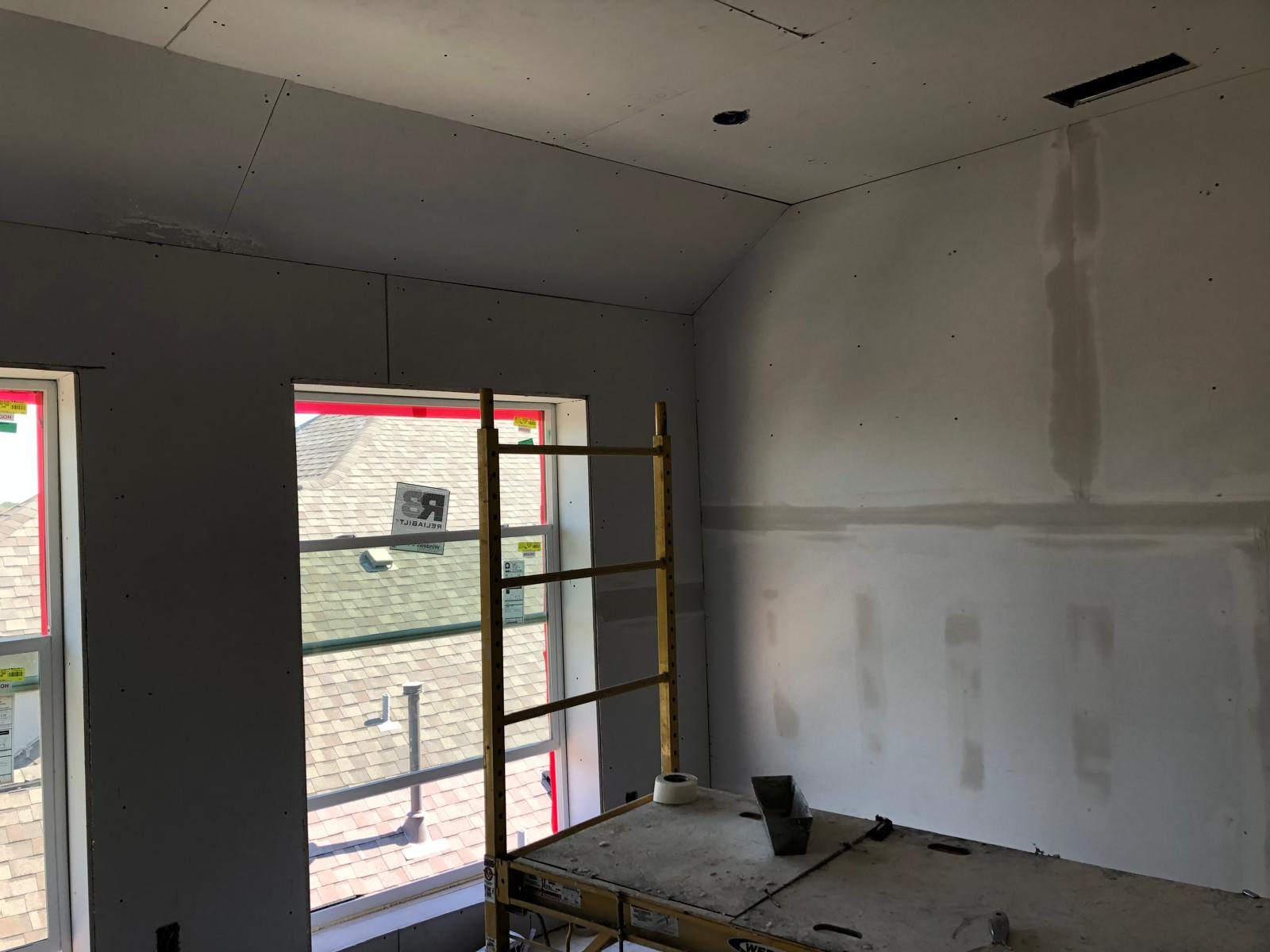
Replacement becomes the sensible option when damage covers a large area, when moisture has compromised the panel, or when the same spot has been patched repeatedly. A ceiling panel that sags from a past leak, a wall with widespread cracking along multiple seams, or drywall that has gone soft from humidity will not hold a surface repair — the material itself has failed.
Replacing a section means cutting the panel back to the nearest studs, hanging new drywall, and finishing the joints across a wider area. It is more work than a cut-out repair, but it is often faster and cleaner than stacking patches on material that will keep failing. It also creates the opportunity to check what is behind the wall — insulation, wiring, or the source of a leak — before closing it up again.
Signs the Damage Is More Than Cosmetic
Some drywall damage is a symptom rather than the problem itself. A crack that reappears after being repaired, especially one that runs diagonally from a door or window corner, can indicate ongoing foundation movement — common in Austin's clay soils. Repairing the crack without understanding the movement means repairing it again later.
Moisture signs deserve the most caution. Stains that grow, paint that bubbles, a musty smell near a wall, or drywall that feels soft all point to water finding its way in. The drywall is the last thing to fix in that situation — the source of the moisture has to be found and stopped first, whether it is a roof, a plumbing line, or condensation from an HVAC run. If you are unsure what you are looking at, our earlier guide on drywall repair in Austin explains how professionals evaluate damage before starting work.
What a Professional Repair Visit Involves
A professional visit starts with the same evaluation described in this guide: identifying the type of damage, checking the surrounding material, and looking for signs of moisture or movement behind the surface. From there, the area is protected — floors covered, dust contained — before any cutting begins.
The repair itself follows the sequence that matches the damage: patch, cut-out, or section replacement, followed by taping, compound coats, sanding, and texture matching. The final step is priming and paint blending so the repair disappears under normal and angled light. You should expect a clear explanation of what was found, what approach was chosen, and why — and a finished wall that does not announce where the damage used to be. When you are ready, contact Brightline Remodeling to describe what you are seeing, or call (512) 815-3698.
Frequently Asked Questions
Can a small drywall hole just be patched?
+
Yes, when the hole is small and the drywall around it is firm and dry. Nail holes, dents, and holes up to a few inches across can usually be patched with compound or a mesh patch. If the surrounding material is soft, stained, or crumbling, the damaged section should be cut out instead.
How do I know if drywall needs to be replaced instead of repaired?
+
Replacement makes sense when damage covers a large area, when the panel has been softened by moisture, or when the same spot has failed repeatedly. A simple test: if the drywall flexes, crumbles, or stays damp, patching over it will not last.
Are cracks in drywall a sign of a bigger problem?
+
Sometimes. Hairline cracks at seams are often just seasonal movement, which is common with Austin's clay soils. Cracks that keep returning after repair, widen over time, or run diagonally from door and window corners are worth having evaluated before they are patched again.
Should water-stained drywall always be replaced?
+
Stained drywall should never just be painted over. The source of the moisture needs to be found and stopped first, and any section that has gone soft or shows mold should be removed. Dry, stable areas may be salvageable once the moisture issue is resolved.
Get Your Drywall Damage Evaluated
Not sure whether your wall needs a patch, a repair, or a replacement? Contact Brightline Remodeling to describe the damage, or call (512) 815-3698 to schedule a look.
Explore More
Browse our remodeling services, see recent work in our gallery, read more on the blog, or contact us to discuss your project.
Services
About the Author
Brightline Remodeling
Brightline is a design-build remodeling firm serving Austin, Texas — from Northwest Hills and Highland Park West to South Austin, Westgate, and Garrison Park. Our team writes from active project experience, not theory.
Ready to start?
Get a free estimate from Brightline.
Tell us about your Austin project and we'll be in touch within one business day.