Drywall Repair
Drywall Repair in Austin: Costs, Process and When to Call a Pro
Holes, cracks, and water stains on drywall are some of the most common problems in Austin homes. This guide explains which repairs you can handle yourself, how a professional repair works step by step, what affects the cost, and when it is time to call a pro.
Drywall Repair in Austin: Costs, Process and When to Call a Pro | Austin, TX | Brightline Remodeling
Drywall is tough enough for everyday life, but it is not indestructible. A door swings too hard, the house shifts through a dry summer, or a slow leak soaks a ceiling, and suddenly a wall that looked fine needs attention. The good news is that most drywall damage can be repaired so it disappears into the surrounding wall, as long as the repair is done in the right order and the finish is matched carefully.
Table of Contents
- 1. Common Drywall Damage in Austin Homes
- 2. Small DIY Patches vs. Damage That Needs a Professional
- 3. The Professional Drywall Repair Process, Step by Step
- 4. What Affects Drywall Repair Cost
- 5. Why Texture Matching Matters in Finished Living Spaces
- 6. How Drywall Repair Fits Into a Larger Remodel
- 7. When to Call a Pro
- 8. Frequently Asked Questions
Common Drywall Damage in Austin Homes
Doorknob holes are among the most frequent repairs. A door without a stop eventually punches a round hole in the wall behind it. Dents and gouges come from moving furniture, kids, and pets. Nail pops show up as small round bumps or cracks where a fastener has worked loose from the framing, often as lumber dries and shifts.
Cracks are especially common in Central Texas. Expansive clay soils swell when wet and shrink during dry spells, so foundations move slightly through the seasons. That movement tends to show up as diagonal cracks running from the corners of doors and windows, or as cracked tape along seams. Water damage is the most serious category: stains, bubbling paint, sagging ceiling panels, or soft spots usually point to a roof, plumbing, or HVAC condensation leak.
Small DIY Patches vs. Damage That Needs a Professional
Many small repairs are reasonable DIY projects. Nail holes, tiny dents, and a single popped nail can usually be fixed with a screw, a little joint compound, light sanding, and touch-up paint. A small hole can often be covered with a self-adhesive mesh patch and a few thin coats of compound.
Larger damage is a different job. Holes bigger than a fist, damaged corners, cracks that keep coming back, sagging or stained ceilings, and anything involving moisture need more than a patch kit. These repairs require cutting out damaged material, adding backing or replacing a section, and blending the new surface so it does not show under paint and light. That is where experience makes the difference between a visible patch and a wall that looks untouched.

The Professional Drywall Repair Process, Step by Step
Assessment comes first. The damage is inspected to find its cause, whether that is a missing door stop, structural movement, or moisture, so the repair does not fail again. Water-damaged areas are checked to confirm they are dry before any work begins.
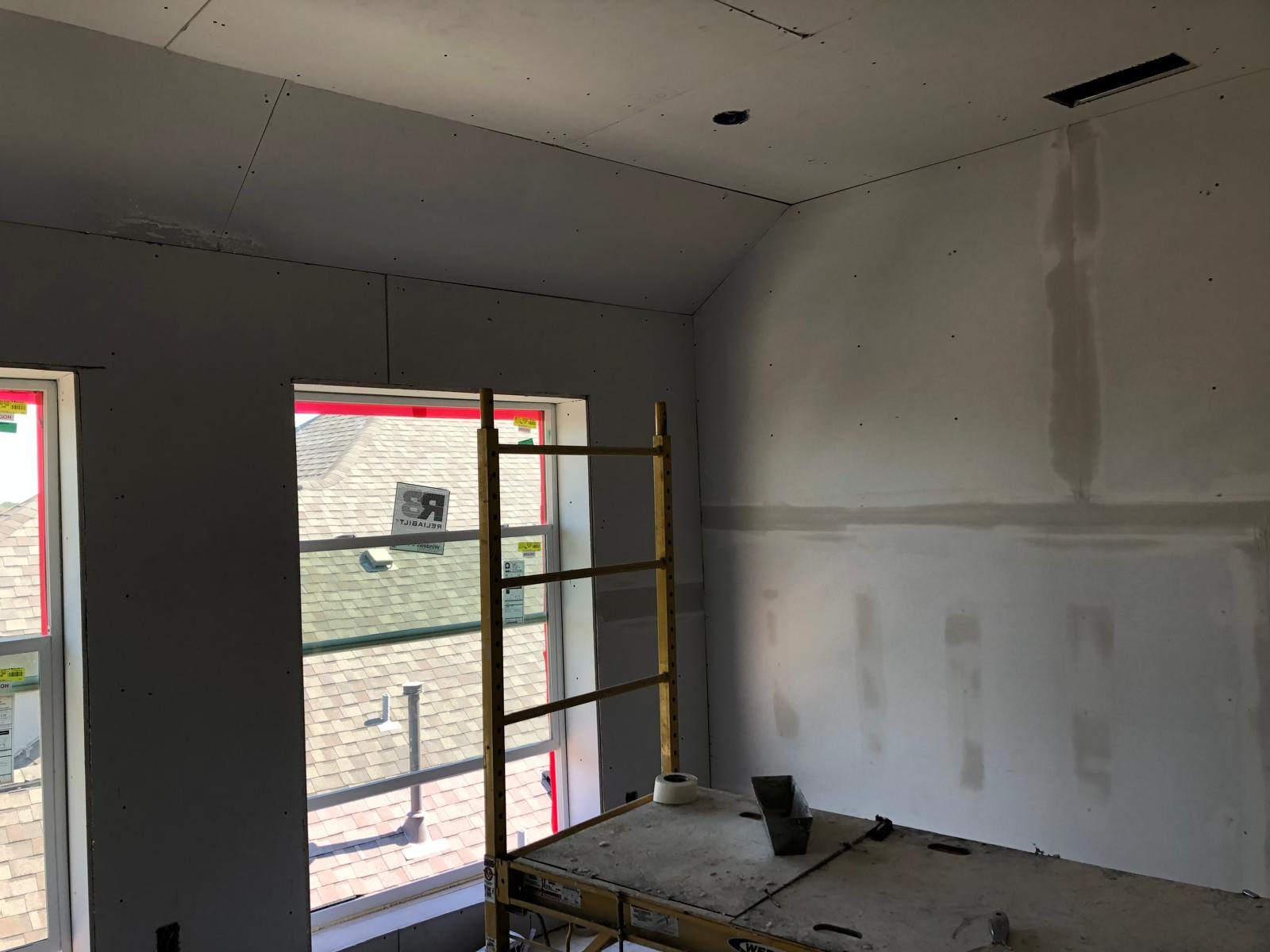
Next, damaged drywall is cut back to sound material in a clean, square shape. Small openings are patched with backing support, while larger areas get a new section of drywall fastened to the framing. The seams are then taped and covered with joint compound in several thin coats, each allowed to dry before the next.
Once the compound is set, the area is sanded smooth and feathered out so there is no visible ridge. The existing wall texture is matched, then the repair is primed so the new compound absorbs paint the same way as the rest of the wall. Finally, the area is painted, often corner to corner on the affected wall so the color and sheen are uniform.
What Affects Drywall Repair Cost
Every drywall repair is priced on its own details. The size and number of damaged areas matter most: one small patch is a very different job than several sections across multiple rooms. Location and accessibility also play a role, since ceilings, stairwells, and tall walls take more setup and time than an easy-to-reach wall at eye level.
Texture matching adds work, especially for heavier or hand-applied textures. The extent of water damage can change the scope considerably if insulation, framing, or large sections of drywall need to be replaced. Painting scope is the last factor: touching up one spot, repainting a full wall, or painting an entire room all lead to different totals. The most reliable way to understand your project is an in-home estimate.
Why Texture Matching Matters in Finished Living Spaces
Many Austin homes have orange peel, knockdown, or hand-troweled wall and ceiling textures. A smooth patch in the middle of a textured wall stands out immediately, especially in rooms with large windows or raking light across the surface. Good texture matching recreates the pattern, depth, and spacing of the surrounding finish so the repair blends in once it is primed and painted. In living rooms, kitchens, and hallways where walls are seen every day, this step is what makes a repair truly invisible.
How Drywall Repair Fits Into a Larger Remodel
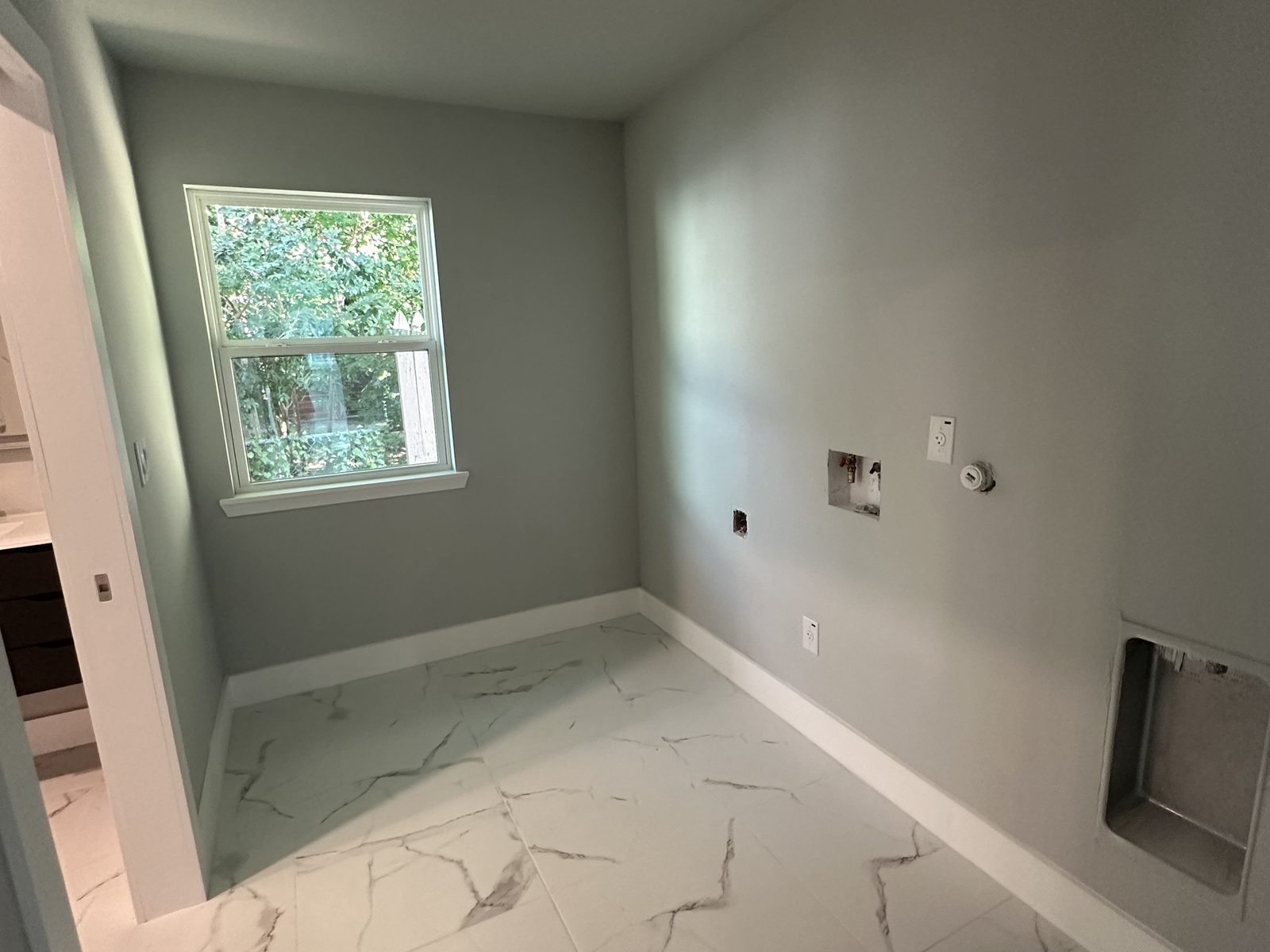
Drywall work is part of nearly every renovation. A kitchen remodel in Austin often involves moving plumbing, adding lighting, or changing cabinet layouts, which means opening and closing walls. A whole-home remodel may include removing walls, updating electrical, and refinishing ceilings throughout the house.
If you are already planning a project, it usually makes sense to fold existing drywall repairs into the same scope so walls are finished and painted once. The same thinking applies to other kitchen upgrades; our guide to countertop installation in Austin covers how counters fit into a remodel versus a standalone upgrade.
When to Call a Pro
Call a professional for large holes, any ceiling damage, and water stains that may hide moisture or mold behind the surface. Recurring cracks are another signal: if the same crack returns after patching, the underlying movement should be evaluated before the wall is repaired again. Our drywall repair services in Austin cover patching, section replacement, texture matching, and finishing so the repaired area is ready for paint.
Frequently Asked Questions
What affects the cost of drywall repair in Austin?
+
Cost depends on the size and number of damaged areas, how accessible they are, the texture that needs to be matched, the extent of any water damage, and how much painting is needed. We provide a project-specific estimate after seeing the damage.
How long does a drywall repair take?
+
Joint compound needs time to dry between coats, so even a small repair usually spans more than one visit or day. Larger repairs, texture matching, and painting can extend the timeline.
Can I repair drywall myself?
+
Small nail holes, dents, and minor patches are often manageable DIY projects. Large holes, ceilings, recurring cracks, and water damage are better handled by a professional.
Will the repair be visible after painting?
+
When the surface is feathered smoothly, the texture is matched, and the area is primed before painting, a repair should blend into the surrounding wall.
Need Drywall Repair in Austin?
Tell us about the damage, and we will help you plan a repair that blends in. Contact Brightline Remodeling or call (512) 815-3698 to get started.
Explore More
Browse our remodeling services, see recent work in our gallery, read more on the blog, or contact us to discuss your project.
Services
About the Author
Brightline Remodeling
Brightline is a design-build remodeling firm serving Austin, Texas — from Northwest Hills and Highland Park West to South Austin, Westgate, and Garrison Park. Our team writes from active project experience, not theory.
Ready to start?
Get a free estimate from Brightline.
Tell us about your Austin project and we'll be in touch within one business day.